 PREVIOUS
Ulotaront Demonstrates Robust Anti-Panic Activity in the Translational CCK-4 Challenge Model
Newsletter # 137
Animal models
Although Ulotaront (TAAR1/5-HT1A agonist) was developed for schizophrenia, its novel mechanism may extend to anxiety and panic disorders. Panic disorder remains a high unmet-need indication where fast-acting, non-sedating therapies are lacking. Demonstration of efficacy in the translational CCK-4 challenge model provides early clinical relevance and supports strategic expansion beyond schizophrenia.
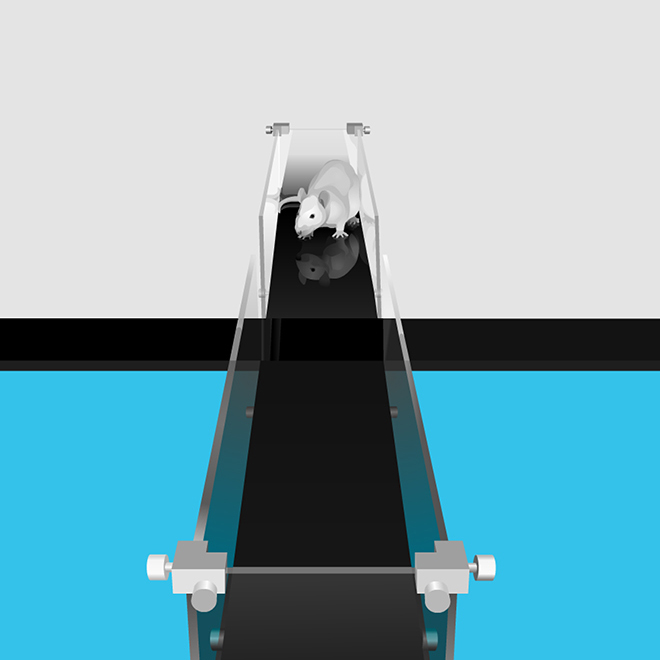
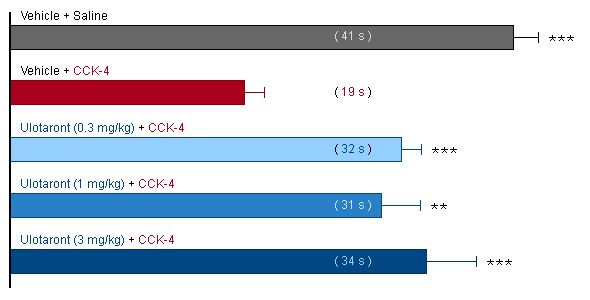
The CCK-4 Elevated Plus Maze (EPM) challenge is a well-established preclinical model of panic-like behavior in the rat. CCK-4 markedly reduces exploration of open arms, reflecting increased anxiety and panic-related responses. Our platform assesses anti-panic activity through the exploratory activity in the open arms of EPM in the rat or mouse.
-
Strategic Takeaways for Pipeline Expansion
• The CCK-4 challenge generated a robust panic-like response, establishing a highly translational and decision-enabling efficacy model for candidate screening.
• Ulotaront delivered near-complete reversal of CCK-4-induced behavioral deficits at low oral doses (0.3-3 mg/kg), highlighting substantial anti-panic potential.
• Convergent improvements across multiple behavioral endpoints provide strong evidence of pharmacological efficacy and support further development in anxiety and panic-related indications.
• These findings illustrate how translational behavioral models can uncover indication-expansion opportunities and generate actionable preclinical evidence for neuropsychiatric programs.
-
Accelerate Your Next Neuropsychiatric Breakthrough
Whether you are evaluating a new mechanism, expanding indications, or selecting a lead candidate, our translational behavioral models provide the data needed to make confident go/no-go decisions.
Let's discuss how we can help unlock the full potential of your pipeline. Contact Us today !
We look forward to hearing from you.
Get in touch